

Hair loss in women: when is it normal and when isn't it
Women lose an average of 50 to 120 hairs per day. That is normal. Noticeable thinning, a widening parting, or clumps of hair in the shower point to hormonal shifts, stress, an iron deficiency, or hereditary factors, and that calls for further investigation by a doctor. Products containing caffeine or biotin can help support your hair, but they do not solve the underlying cause.
Sound familiar? You are not alone. Hair loss is one of the most common questions the hairdressers at the Nederlandse Kappersakademie get asked, and in most cases there really is something you can do about it. Below you will find out how to tell normal hair loss apart from a more serious signal, what the most common causes are, and which products can help strengthen your hair again.
How much hair loss is normal per day?
Your hair goes through a cycle of growing, resting, and shedding, and that is true for everyone. On average you lose between 50 and 120 hairs a day, spread across your brush, your pillow, and the shower drain. That may sound like a lot, but on a head with somewhere between 100,000 and 150,000 hairs, that falls comfortably within the normal cycle. Only above 120 hairs a day is it considered excessive hair loss.
Every hair continuously moves through three phases.
- Anagen phase: the growth phase, the hair actively grows, at an average of about 1 to 1.25 centimeters per month, and around 85 to 90 percent of all your hair is in this phase at any given time.
- Catagen phase: a short transitional phase of a few weeks in which the hair follicle shrinks and growth stops.
- Telogen phase: the resting phase, after which it sheds naturally after two to four months to make way for a new hair. As long as that cycle stays in balance, you barely notice the daily shedding. Disrupt that balance, and suddenly far more hairs land in the telogen phase at once, and that you do notice.
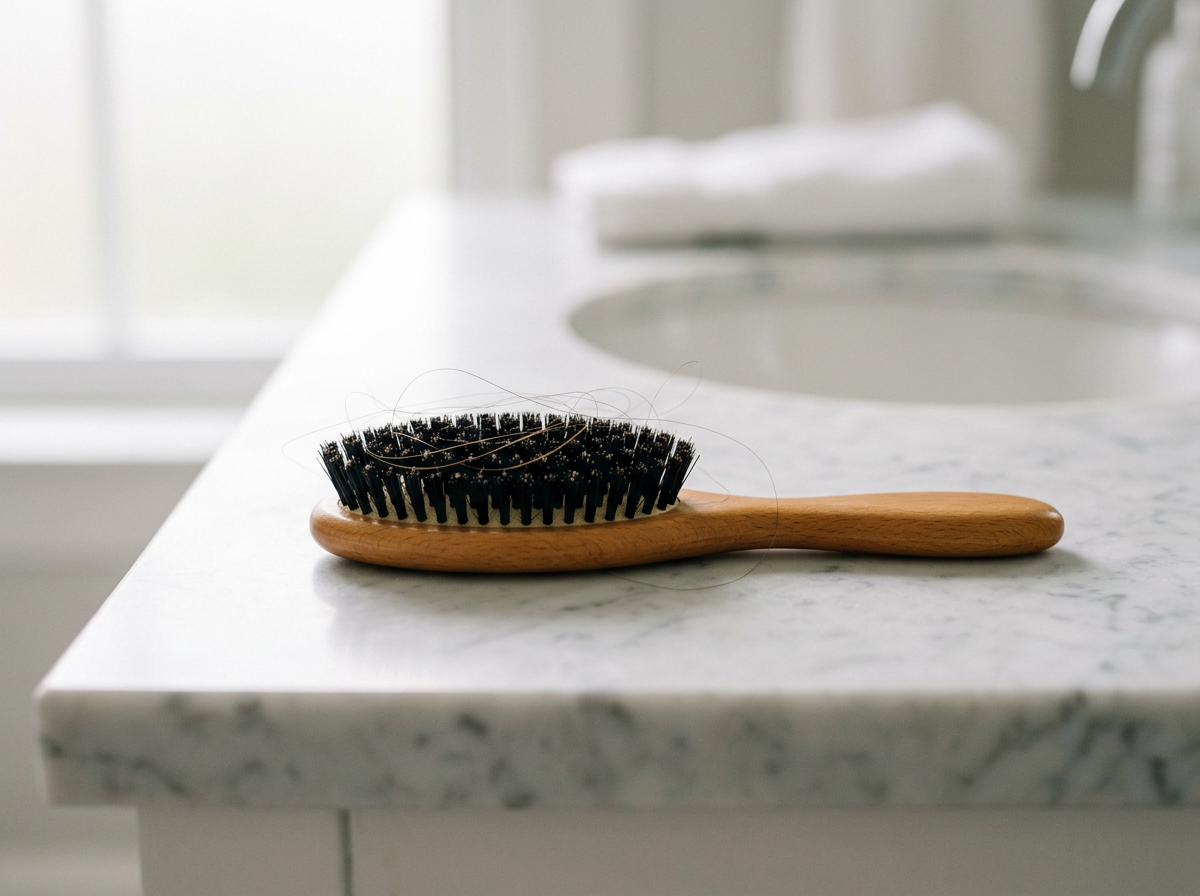
Do you find that your ponytail is noticeably thinner than it was a year ago, does your scalp show through where it did not before, or is your brush holding onto clearly more hair than you are used to? Then it is time to look beyond just the shampoo you are currently using.
What is the difference between temporary and hereditary hair loss?
Not all hair loss is the same, and that distinction matters quite a bit for how you approach it.
Temporary hair loss
also known as telogen effluvium, is triggered by something like stress, giving birth, an illness, rapid weight loss, or a deficiency in iron or vitamin D. Your hair then sheds at an accelerated rate three to six months after that trigger, spread across the whole head. The good news is that once the underlying cause is addressed, hair growth usually recovers on its own.
Hereditary hair loss
also known as androgenetic alopecia, progresses more gradually. In women you usually do not see bald patches like in men, but rather a gradually widening parting and thinner hair on top of the head, while the hairline itself stays intact. This type of hair loss does not go away on its own and calls for a targeted approach, preferably after consulting a doctor or dermatologist, possibly combined with products that work specifically on the hair root. The earlier you start, the greater the chance the hair follicle becomes active again: once a follicle has been inactive for a longer period, regrowth becomes harder.
The most common causes at a glance
- Hormonal shifts: Pregnancy, the period right after giving birth, menopause, and stopping the contraceptive pill can seriously disrupt the hair growth cycle.
- Stress: Physical or emotional stress pushes hair follicles prematurely into the resting phase, causing you to lose more hair than normal a few months later.
- Nutritional deficiencies: A shortage of iron, vitamin D, or zinc is more common than people think, especially with an unbalanced or overly strict diet.
- Genetics: A hereditary predisposition to thinning hair is more common in women than many realize, and often starts as early as your thirties.
- Breakage rather than hair loss: What looks like hair loss is sometimes just brittle hair caused by heat, coloring, or an unsuitable shampoo, not hair that is actually releasing from the root.
What can you do about it yourself?
With temporary hair loss, patience is your biggest ally, along with removing the trigger. With hereditary or persistent thinning, a targeted routine really can make a difference, especially if you start in time.
A good first step is a shampoo against hair loss that cleanses the scalp without being too harsh, such as the Kérastase Genesis line, developed specifically for thinning hair. If you want to work more directly on the hair root itself, the Kérastase Genesis Sérum Anti Chute is a commonly used next step, applied daily to the scalp. This serum contains niacinamide, caffeine, and biotin among other ingredients, which strengthen the hair root and make the hair fiber sturdier.
For those who prefer to work with a clinically proven ingredient, the L'Oréal Aminexil Advanced ampullen contains Aminexil, an active ingredient that strengthens the hair root and improves hair density. A course of several weeks can make a noticeable difference for thinning hair, provided it is used consistently.
Not sure whether you are dealing with hair loss or hair breakage? Also read our in depth comparison of the two serums that tackle hair loss and dry hair together for the right next step in your routine.
For persistent or hereditary hair loss, there are also clinical options beyond care products, such as topical minoxidil or a treatment plan at a skin clinic. That falls outside what a care routine can solve on its own, and is something to discuss with a doctor or dermatologist.

Do hair growth serums actually work?
Short answer: with the right cause and the right use, yes. Serums with proven active ingredients such as Aminexil or caffeine can strengthen the hair root and extend the lifespan of a hair, which over time leads to hair that looks denser. What they do not do is solve an underlying hormonal issue, a nutritional deficiency, or a medical condition. So think of a serum as support for a healthy routine, not as a replacement for seeing a doctor when hair loss persists or suddenly increases.
Important to know: you will rarely see results within two weeks. Most serums and treatments need at least eight to twelve weeks of consistent use, simply because the hair growth cycle itself already spans several months. So give a product time before concluding it does not work.
When should you see a doctor?
Not sure whether your hair loss falls within the normal range? See a doctor if you notice the shedding suddenly and significantly increasing, if you see bald patches rather than even thinning, or if the hair loss comes with other symptoms such as extreme fatigue, an irregular cycle, or skin issues. A simple blood test can often quickly rule out or confirm the most common causes, after which you know exactly which approach, and which products, will work best for you.
Frequently asked questions
How much hair loss is normal per day?
On average you lose 50 to 120 hairs a day, spread throughout the day. That falls within the natural hair growth cycle and is not, on its own, a reason for concern. Only above 120 hairs a day is it considered excessive hair loss.
What is the difference between temporary and hereditary hair loss?
Temporary hair loss is triggered by a clear cause such as stress or a hormonal change and usually recovers on its own. Hereditary hair loss progresses gradually, often starts with a widening parting, and does not go away without a targeted approach.
Do hair growth serums actually work?
Serums with proven ingredients such as Aminexil or caffeine can strengthen the hair root and slow down thinning hair, provided they are used consistently for at least eight to twelve weeks. They do not resolve an underlying medical cause.


