
Greasy hair the next day? It really depends on this
Greasy hair the day after washing is almost always caused by overactive oil glands reacting to washing too often, the wrong shampoo, or too much conditioner too close to the scalp. A clarifying shampoo once a week, combined with a light, sulfate-free shampoo for oily hair on the other days, brings your oil production back into balance.
Why does my hair get greasy faster when I wash it more often?
This feels counterintuitive, but it's true: the more often you wash, the greasier your hair becomes over time. Every wash with a strong shampoo strips the natural oils from your scalp. Your scalp interprets this as a shortage and works harder to replenish that oil. If you then wash again the very next day, the process repeats, and you end up in a cycle where your scalp never gets the chance to recover. The solution isn't washing more, but gradually reducing your washing frequency to two or three times a week, supported if needed by a mild sulfate and paraben free shampoo if your scalp reacts sensitively to stronger cleansers.
These habits are probably making it worse
Besides washing frequency itself, there are a few things many people do unconsciously that keep greasy hair going.
- Conditioner too close to the roots: conditioner is meant to nourish the lengths, not to make your scalp even greasier. Only apply it from your ears downward.
- Constantly running your hands through your hair: every time you touch your hair, you transfer oil from your fingers onto it, which speeds up that greasy feeling.
- Not rinsing thoroughly at the back of your head: this spot gets forgotten fastest, and it's exactly where shampoo and conditioner residue tends to build up.
- A dirty pillowcase: oil and product residue accumulate on it and work their way back into your roots overnight.
The right washing technique against greasy hair
It's not just what you use, but how you wash that makes a difference. These steps build on our full hair washing routine, with a bit more focus on oil production:
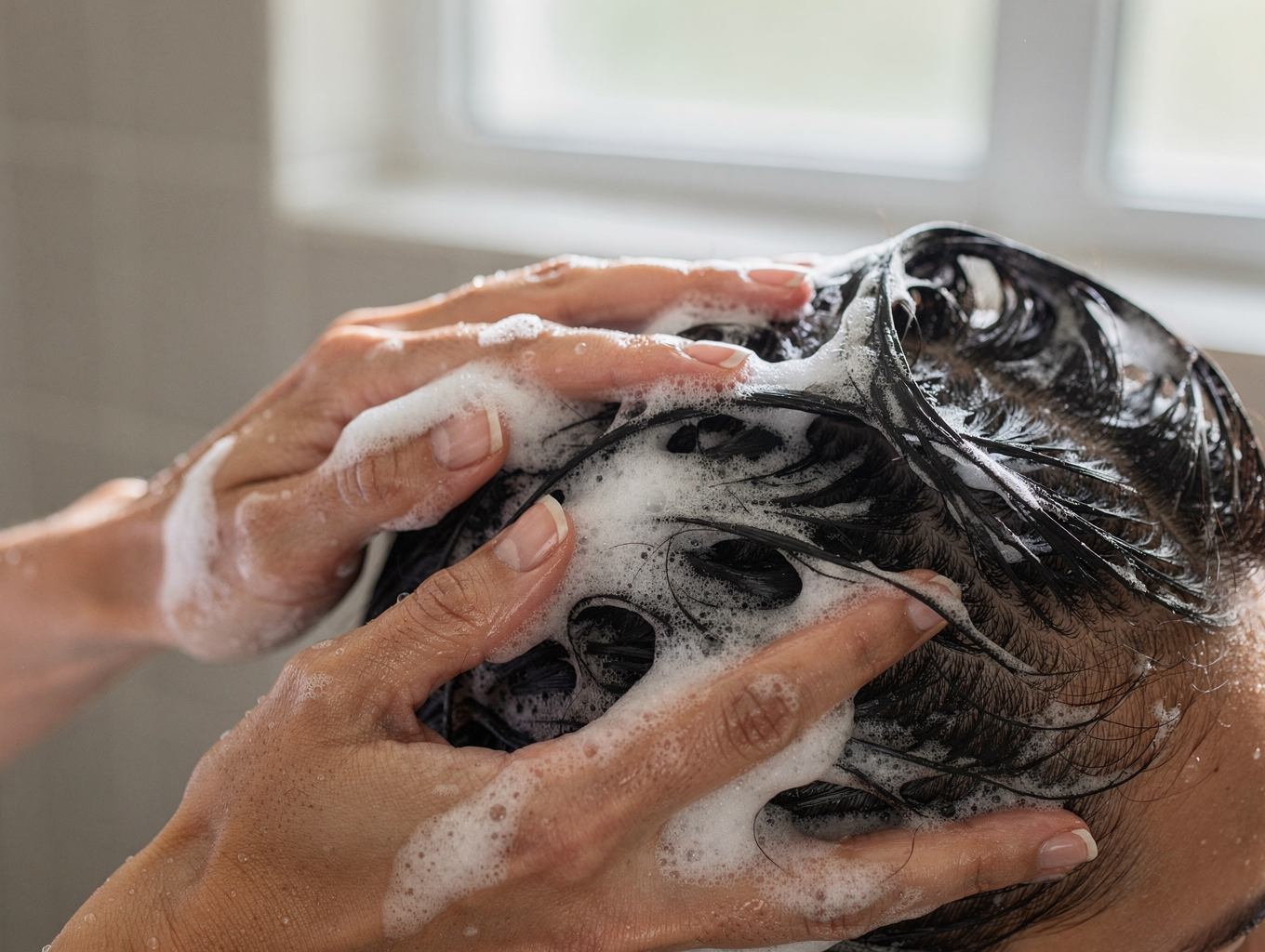
- Thoroughly wet your hair with lukewarm water, not too hot, since hot water actually stimulates extra oil production.
- Apply a shampoo such as L'Oréal Professionnel Scalp Advanced Anti-Oiliness shampoo only at the roots, not through the lengths, since that's where the oil sits.
- Massage with your fingertips, never your nails, to avoid irritating your scalp.
- Rinse thoroughly, paying extra attention to the back of your head and neck.
- For stubborn greasy hair, wash twice in a row with a small amount of shampoo, rather than once with a lot.
- Finish with a cooler blast of water, which closes the hair cuticle and slightly slows down oil production.
Should I put conditioner on my scalp or not?
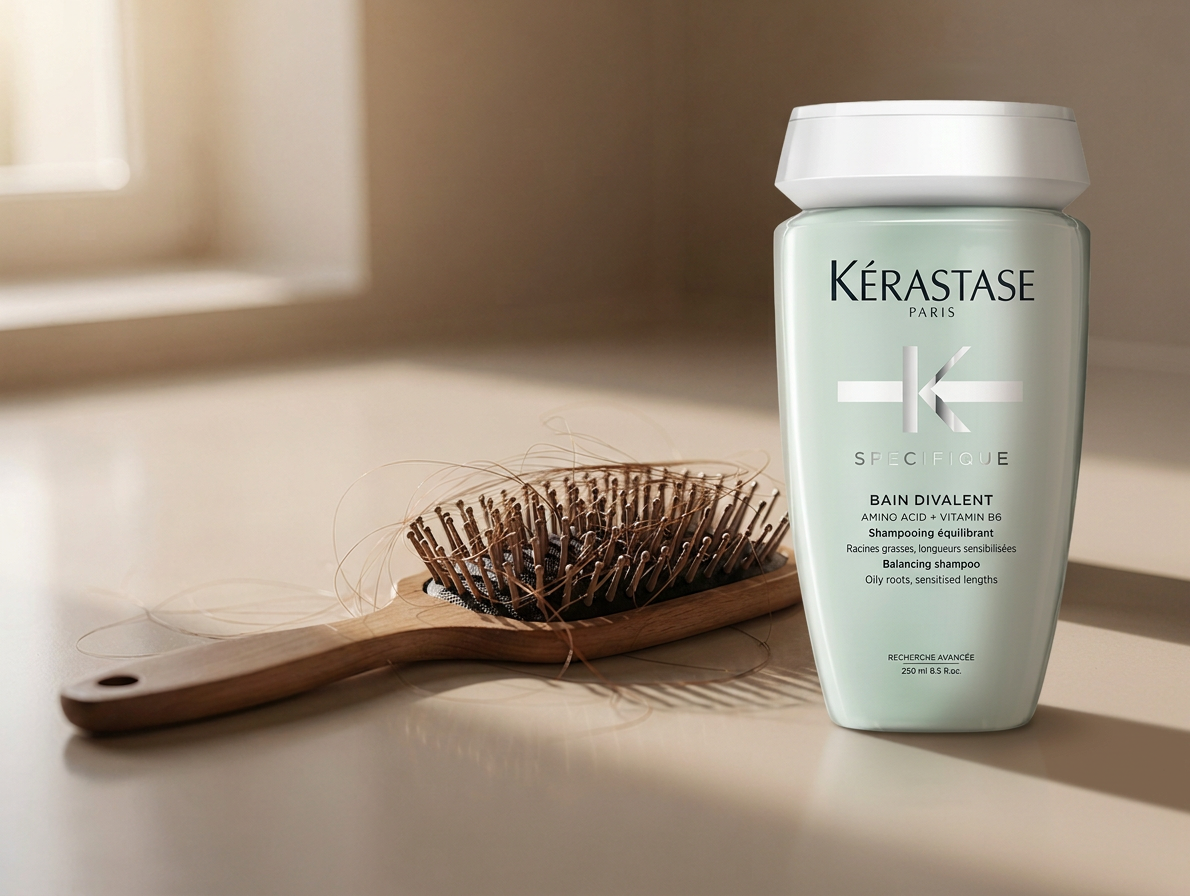
No, and this is one of the most common mistakes. Conditioner is meant to nourish dry lengths and ends, not to hydrate your scalp, which already produces plenty of oil on its own. Apply conditioner only from halfway down your hair to the ends, and leave your scalp alone.
Does dry shampoo help in the long run?
Using dry shampoo now and then is perfectly fine, and even useful for cutting back your washing frequency. But dry shampoo doesn't solve the cause, it masks it. It absorbs oil temporarily, but if used too often it can actually clog your scalp, so the underlying problem remains or even gets worse.
Which shampoo should you choose for greasy hair
For that weekly deep clean, to really remove built up product residue, the Kevin Murphy Detox Balance & Protect is an excellent choice, suitable for all hair types. Want to make small adjustments between washes without washing again, take a look at our range of dry shampoo.
Frequently asked questions
Why does my hair get greasy faster when I wash it more often?
Washing often strips the natural oils from your scalp, causing your scalp to respond by producing more oil. You only break this cycle by gradually reducing your washing frequency.
Does dry shampoo help in the long run?
Dry shampoo temporarily masks greasy hair, but doesn't solve the underlying cause. Use it as a supplement between washes, not as a replacement for a good washing routine.
Should I put conditioner on my scalp or not?
No. Only apply conditioner to the lengths and ends of your hair, never to the scalp itself, since it already produces enough oil of its own.


